
Navigating a large hospital campus is stressful for patients and visitors alike. Between sprawling parking garages, multiple towers and a maze of corridors, getting to the right clinic on time can feel overwhelming. Tampa General Hospital partnered with RouteMe to give every patient a clear, guided path from their car to their appointment.
By reducing late arrivals and easing the load on front desk staff, TGH has transformed the arrival experience across one of the largest hospital systems in the country.
The client
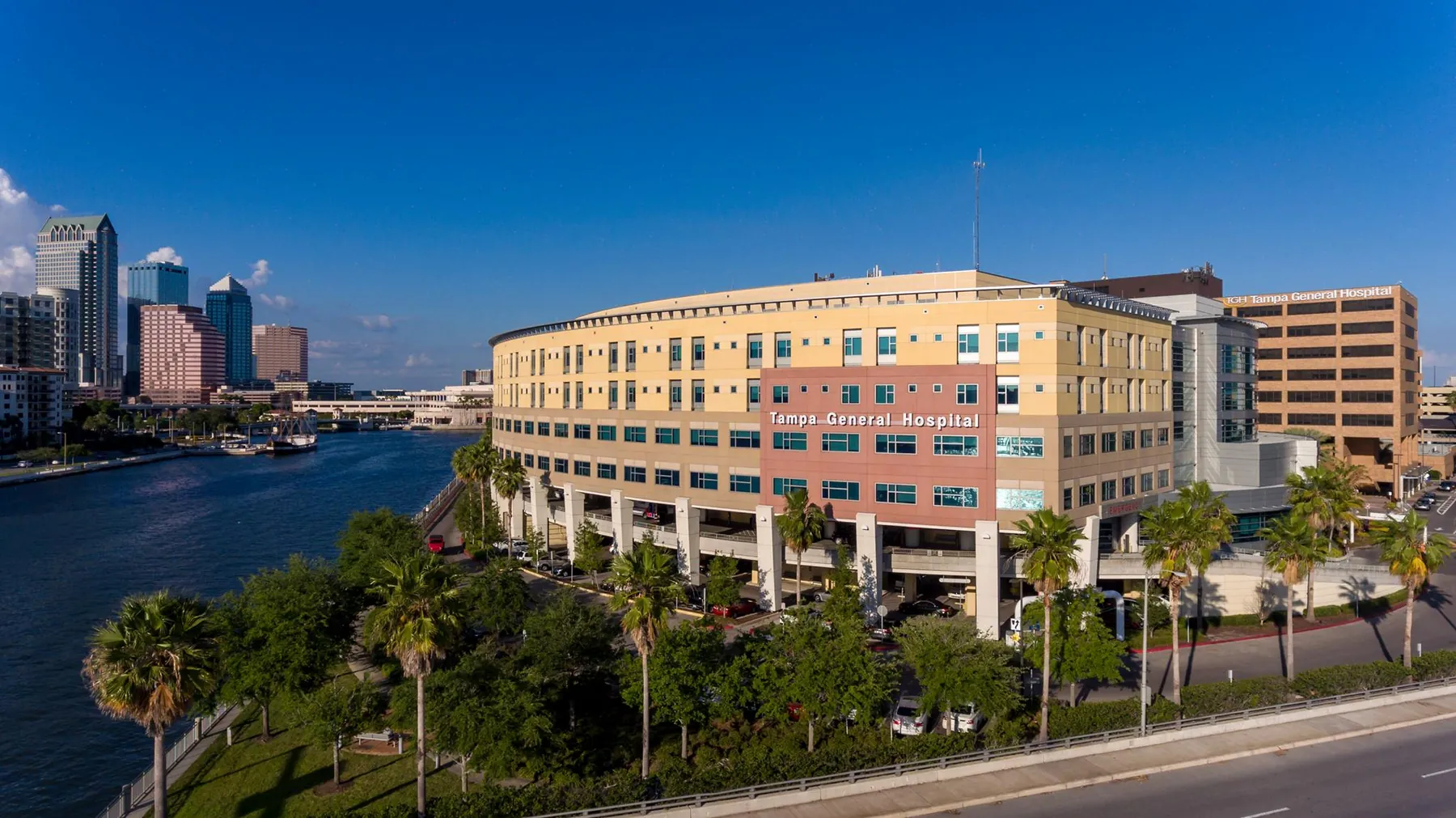
Tampa General Hospital is a 1,041 bed academic medical center and one of the most comprehensive hospitals in West Central Florida. Located on Davis Islands in Tampa, TGH is the region's only Level I Trauma Center and a major teaching hospital affiliated with the USF Health Morsani College of Medicine. With more than 9,000 team members and over one million patient encounters a year, the campus handles an extraordinary volume of daily foot traffic.
The challenge
Tampa General's campus, with multiple buildings, garages, towers and specialty centers, is confusing for patients. Even with clear instructions, people get lost. They backtrack to the wrong elevators and enter through the wrong doors while anxiety about missing their appointment grows.
When patients get lost, they turn to staff. Front desk teams, volunteers and clinicians spend hours answering "where am I supposed to go?" instead of focusing on care. Patients arrive late or miss appointments entirely.
Static signage can't keep up. Clinics move, entrances close for construction and lots fill up. TGH needed guidance that starts before patients arrive, works indoors and updates instantly, without beacons or ultra wideband hardware.
The solution
TGH chose a different kind of wayfinding: proactive guidance before the visit and turn by turn video navigation on campus, with nothing to download.
Pre-visit guidance in MyChart
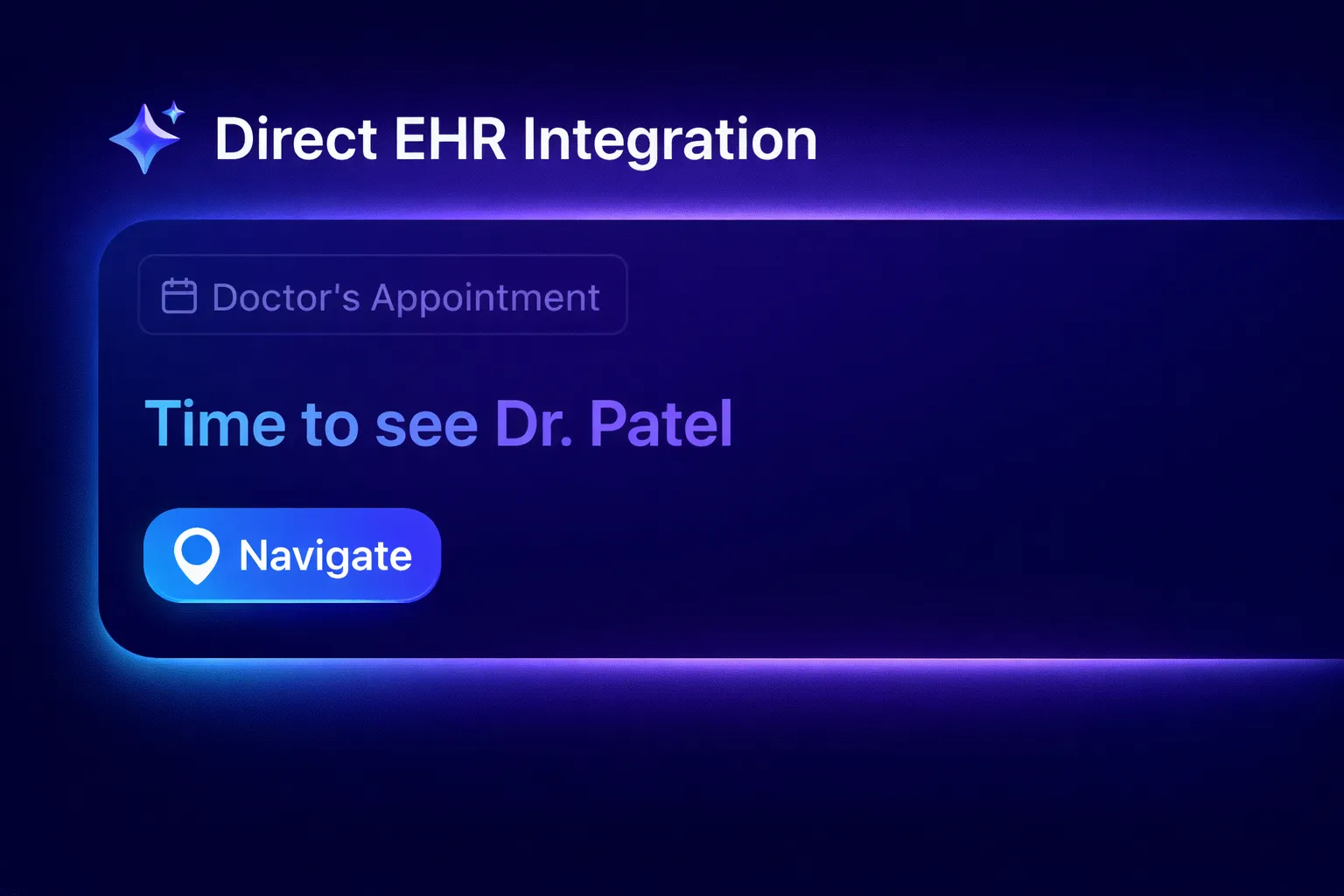
RouteMe is built into TGH's MyChart appointment reminders. Patients tap a link to see where to park, which entrance to use and how long the walk will take, all before they leave home.
Turn by turn on campus
Once on site, patients follow step by step guidance through elevators, corridors and skywalks to the exact clinic door. Routes are cached on the phone so navigation never drops, and voice guidance keeps hands free.
No signage to reprint
When clinics move or entrances close, RouteMe updates instantly. Patients always have the current route, and staff stop getting stopped for directions.
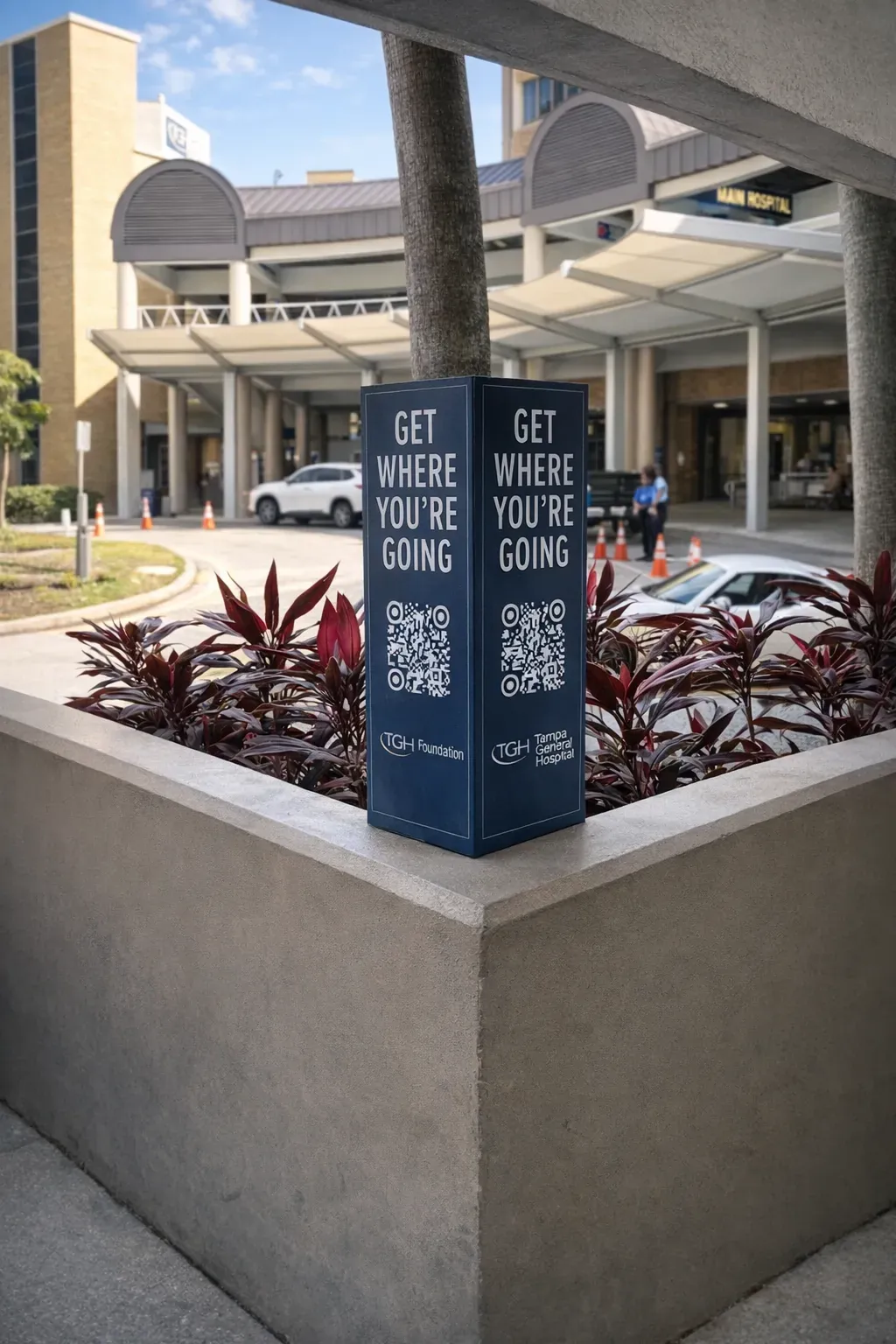
Accessible for every patient
Wheelchair accessible routes, multiple languages and optional voice guidance let every patient navigate independently.
The results
Since launching RouteMe, Tampa General Hospital has seen meaningful improvements across the arrival experience:
- Fewer late arrivals. Pre-visit links plus onsite guidance cut the time patients spend searching for parking and entrances.
- Fewer missed appointments. Clear directions in MyChart reminders reduce abandonment from patients who used to give up after getting lost.
- Front desks refocused. Fewer "where do I go?" interruptions let reception teams concentrate on intake and care.
- Routes that keep up. Clinic moves and entrance closures show up in patient routes immediately.
Looking forward
RouteMe and TGH continue to expand the partnership with RouteMe Touch kiosks at high traffic entrances, real time analytics for campus operations, and messaging that supports discharge and follow up visits.
The goal is simple: every patient, visitor and team member should get where they need to go without asking for help.